




Comment faire croître votre entreprise de toiture avec les systèmes de toiture appliqués à l’état liquide
Comment faire croître votre entreprise de toiture avec les systèmes de toiture appliqués à l’état liquide
Souhaitez-vous faire progresser votre carrière de couvreur? Faites des systèmes de restauration de toiture à application fluide un élément central pour votre entreprise et voyez-la prospérer.
Les systèmes de toiture à application liquide constituent un point d’entrée idéal pour les entrepreneurs souhaitant bâtir une entreprise prospère. Ils vous permettent de restaurer les toits de vos clients de manière rentable, sans nécessiter un investissement important en équipement, produits ou formation.
Dans un récent épisode de CoatingsCoffeeShop® Coffee Conversations, construction Success : Le parcours d’un entrepreneur en restauration, trois experts en toiture ont partagé les meilleures pratiques issues de leurs 100 années d’expérience combinée en matière de toiture.
Pete Harding de GoGreen Roofing, un professionnel chevronné avec plus de 40 ans de succès dans le domaine de la toiture, s'est joint à John T. Hull, propriétaire de RRO Gulf Coast Infrared, et à Eric Thompson, de Henry, une société Carlisle, pour une discussion animée sur la façon dont les systèmes à application fluide peuvent aider les entrepreneurs à lancer et à développer leurs entreprises de toiture.
Pourquoi choisir les systèmes appliqués sous forme liquide
Les systèmes appliqués par fluide sont économiques.
Pour les nouvelles entreprises de toiture, les systèmes de toiture à application fluide constituent un point d'entrée abordable dans le secteur concurrentiel de la restauration des toitures.
It’s a very low cost of entry for equipment, so it’s easy to get into. You can start out with high-quality squeegees, brushes, and rollers without needing to spend tens of thousands on equipment. Also, fluid-applied systems offer a higher margin than other systems.
 Fluid-Applied Systems Feature a Straightforward Learning Path
The learning curve for fluid-applied systems is also shorter than traditional roofing. Contractors can work with the manufacturer to learn proper installation techniques. Henry, for example, offers on-site training, classroom-based instruction, and training programs to help contractors build their skills.
“Before, if you wanted to be a roofer, you had to buy a pancake compressor, hoses, guns, and all that equipment,” says Pete Harding. “Now, with the proper guidance, you can come in, get your license and insurance, and start with fluid-applied roofs. You just need to give yourself time to learn how to do it right, set up the business, and build relationships with manufacturers like Henry.”
Fluid-Applied Roof Systems Are Safer to Install
Installing fluid-applied systems is also safer than many traditional roofing methods. Contractors don’t need to work with hot torches or asphalt. By avoiding torches and kettles, fluid-applied systems create safer, more approachable job sites especially for new crews. This helps boost confidence while you build hands-on expertise.
Fluid-Applied Roof Coatings Have a Promising Future
According to Roof Coatings Manufacturer Association (RCMA), 2.5 billion square feet of roof will need replaced or re-coated each year. Every building owner will eventually be faced with the decision whether to completely tear off an existing roof or repair it. As new roofs and roof replacement costs continue to soar, more building owners are turning to commercial roof restoration as a cost-effective alternative. They’re specifically requesting fluid-applied systems, according to John T. Hull, owner of RRO Gulf Coast Infrared, fluid-applied systems who believes fluid-applied systems are a “big opportunity” for contractors.
“We’ve watched the fluid-applied market grow from one or two percent to around twenty percent of commercial roofing. It’s now mainstream,” said John T. Hull.
Growth factors:
- Escalating demand: Building owners are seeking cost-effective roofing solutions that go beyond costly tear-offs. Fluid-applied restoration extends roof service life with less disruption, less waste, and at a lower cost.
- Better technology and warranties: Advanced chemistries, primers, and fabrics combined with structured warranties promise predictable long-term performance.
- Manufacturer offerings and training: Manufacturers now provide complete roof restoration systems and high-quality products along with training and technical support, making it easier for contractors to adopt and succeed with fluid-applied systems.
- Tested Systems to Achieve Stringent Build Codes: Manufacturers of Fluid Applied Restoration Systems develop full roof assemblies and undergo rigorous testing to achieve compliance or approvals for Miami-Dade County, Title 24, FM, and UL.
How to Seize the Fluid-Applied Opportunity
With more than 40 years of roofing experience, Pete Harding, owner of GoGreen Roofing, predicts that the demand for “fluid-applied is going to grow exponentially, even over the next five years, so I'm really focusing on that and just keep educating our crews and working with the manufacturer to bring better roofing solutions to clients,” Pete explains.
 Learn the Business
To succeed in commercial roofing restoration, contractors should master both roofing fundamentals and roof restoration techniques.
Roofing Basics: Develop a strong understanding of core roofing principles, including water management, flashing details, penetrations, drains, terminations, and substrate repair. Stay current with roof restoration best practices, and get comfortable with essential skills such as surface preparation, adhesion testing, fabric reinforcement, correct mil thickness, curing windows, and proper use of equipment.
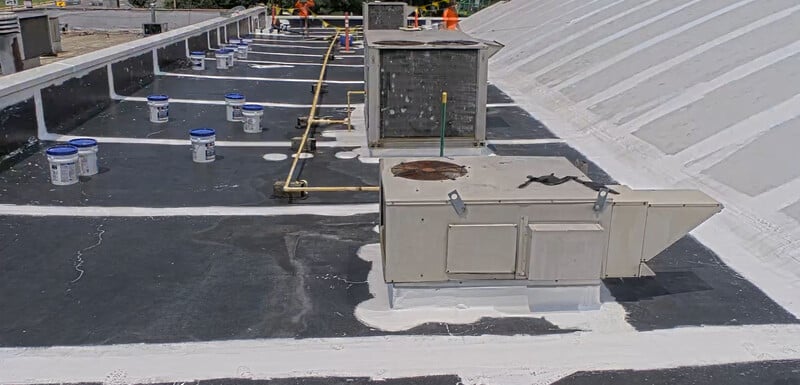
Roof Restoration: Repair the roof before applying roof coatings. Roof restoration means identifying deficiencies, moisture and addressing them first. A clean, dry, and sound roof is critical to performing a successful restoration. Simply coating the existing roof seals in their current condition, so experts recommend repairing and/or replacing roofing sections as needed before applying any fluid-applied system. Roof restoration can include removing up to 25% of the existing roof before a full restoration can occur.
Roof Evaluation: This is a critical part of learning the business. Learn the tools of the trade for properly evaluating moisture and roofing conditions. Roof evaluations encompass examining conditions directly and testing for moisture and decay before creating a restoration plan. Involve consultants, as needed, to ensure a complete and accurate evaluation. There are options for learning and partners who can help. Partnering with a Roof Consultant that is an IIBEC Registered Roof Observer Roofing Observer (RRO) can help you evaluate roof conditions, conduct moisture scans, and perform core cuts.
Adopt a Growth Mindset
Pursue a growth and continuous improvement mindset and learn everything you can about roofing, fluid-applied systems, and roof restoration. You can start in the classroom. Manufacturers, like Henry, offer classes on how to properly use their products and stay current with evolving roofing technology. You can also expand your knowledge by connecting with professionals in the industry, like Pete Harding.
You need to have mentors. Then get out there and get your hands dirty and do it and learn by trial and error. When I'm on a roof as a consultant, I will certainly provide quality oversight for the owner. I'll also take a young roofer aside and privately give them some constructive criticism. This can improve the culture in the industry as a whole.
Partner with Professionals
Work with consultants and manufacturers to strengthen your roof assessment and commercial roof restoration skills. Pete recommends working with IBEC credentialled consultants to analyze the roof’s needs, especially when working on large commercial roofs and then working onsite with manufacturing representatives the first few jobs to nail down the application process.
By partnering closely with both manufacturers and consultants, you can refine your techniques, deliver better results for building owners, and steadily grow your roofing business. You can also become an authorized contractor for installing full Roof Restoration Systems that are eligible for warranties up to 20 years.
Establish Clear, Responsive Communication Habits
Be mindful of how you present your business and yourself. Avoid outdated terms like “painting roofs with coatings” and instead use accurate roof restoration and repair language. When preparing an estimate, strive to educate the customer:
- Explain the assessment: Share findings from moisture tests, adhesion checks, and core samples.
- Itemize repairs: Call out wet insulation replacement, flashing upgrades, or substrate repairs.
- Spell out system steps: Walk through primer, reinforcement, base coat, and topcoat applications.
- Provide maintenance guidance: Outline long-term care and renewal options at the end of the system’s service life.
- Reference warranty requirements: Be clear about coverage tiers, required mil thickness, inspection schedules, and details.
Contractors who take the time to educate customers often outperform low-bid competitors. As Eric Thompson explains: “I’ve seen the higher-priced, properly scoped roof restoration win because the owner understood why it protects their assets.”
Stick to a Proven Roof Restoration Process and Avoid Common Pitfalls
-
Assess
- Visual inspection (cap sheet loss, seams, flashings, penetrations)
- Moisture surveys (infrared, Tramex, cores)
- Adhesion tests and pull tests where needed
-
Repair and Upgrade
- Cut out wet insulation, fix substrate defects
- Replace/repair flashings, drains, terminations
- Address ponding sources where feasible
-
Restore with a Fluid-Applied System
- Prime and reinforce critical details
- Apply fluid-applied roof coatings to specified mil thickness
- Verify coverage and cure; document with photos and wet/dry mil readings
As Eric Thompson puts it: “Restoration isn’t a miracle in a bucket. It’s a process of inspections, repairs, then the system done right.”
Common Pitfalls
- Skipping diagnostics: Always verify with moisture surveys and cores samples where needed.
- Under-repairing: Restoration requires repairs and upgrades before applying roof coatings.
- Wrong mils: Use wet mil gauges and verify the application meets specified thickness.
- Rushing cure windows: Respect temperature, humidity, and recoat intervals.
- Poor documentation: Maintain photos, moisture readings, and daily logs to simplify warranty applications.
Build Credibility Through Performance
For Pete Harding, credibility comes down to showing up prepared, reading specs carefully, asking questions, and delivering work to manufacturers specifications. That reputation, backed by manufacturers and consultants, has earned GoGreen Roofing industry recognition, national awards, and steady referrals.
Scaling the Ladder: Pete Harding’s Entrepreneurial Rise in Roofing
Pete’s journey shows how a contractor can grow from humble beginnings into a leader in the roofing industry market while prioritizing people, education, and partnerships.
“I went from buying five-gallon buckets of fluid-applied products for small jobs to doing close to 50,000 squares of fluid applied roofing this year.” Today, GoGreen Roofing manages 20 spray pumps, flatbed trucks, and large crews.
Pete started in the roofing industry in the 1980s, working his way up from a laborer. He founded his own company because he wanted to create a place where “excellent humans” could thrive while providing clients with dependable, sustainable roofing solutions.
Like many early adopters, Pete’s first experience with roof coatings entailed driving an old truck, picking up five-gallon buckets of material, and rolling the product onto small projects. Over time, he learned how to transform fluid-applied roof coatings from a simple coating into a full restoration system.
Experimenting with new polyester reinforcements and elongation formulas and embracing ongoing roof restoration innovations helped propel his business while demonstrating the staying power of fluid-applied roof restoration systems.
Strong business and personal practices, like patience, steady learning, and investing in the right people also helped Pete scale GoGreen Roofing into a company capable of handling multi-million-dollar commercial roofing restoration projects and properties exceeding 10,000 square feet.
Pete believes in creating a business culture where crews feel valued, trained, and part of something bigger. He encourages new contractors to partner early with trusted manufacturers like Henry who provide structured training, on-roof guidance, and ongoing support.
“The manufacturer teaches you how to fish. With training and partnership, you don’t just get a product, you get a path to success,” Pete says.
Scaling the Ladder: Pete Harding’s Entrepreneurial Rise in Roofing
Pete’s journey shows how a contractor can grow from humble beginnings into a leader in the roofing industry market while prioritizing people, education, and partnerships.
“I went from buying five-gallon buckets of fluid-applied products for small jobs to doing close to 50,000 squares of fluid applied roofing this year.” Today, GoGreen Roofing manages 20 spray pumps, flatbed trucks, and large crews.
Pete started in the roofing industry in the 1980s, working his way up from a laborer. He founded his own company because he wanted to create a place where “excellent humans” could thrive while providing clients with dependable, sustainable roofing solutions.
Like many early adopters, Pete’s first experience with roof coatings entailed driving an old truck, picking up five-gallon buckets of material, and rolling the product onto small projects. Over time, he learned how to transform fluid-applied roof coatings from a simple coating into a full restoration system.
Experimenting with new polyester reinforcements and elongation formulas and embracing ongoing roof restoration innovations helped propel his business while demonstrating the staying power of fluid-applied roof restoration systems.
Strong business and personal practices, like patience, steady learning, and investing in the right people also helped Pete scale GoGreen Roofing into a company capable of handling multi-million-dollar commercial roofing restoration projects and properties exceeding 10,000 square feet.
Pete believes in creating a business culture where crews feel valued, trained, and part of something bigger. He encourages new contractors to partner early with trusted manufacturers like Henry who provide structured training, on-roof guidance, and ongoing support.
“The manufacturer teaches you how to fish. With training and partnership, you don’t just get a product, you get a path to success,” Pete says.
Request Training by providing your details below
A Henry Staff member will be in touch to share training dates and locations or setup a custom training for you and your crew.